
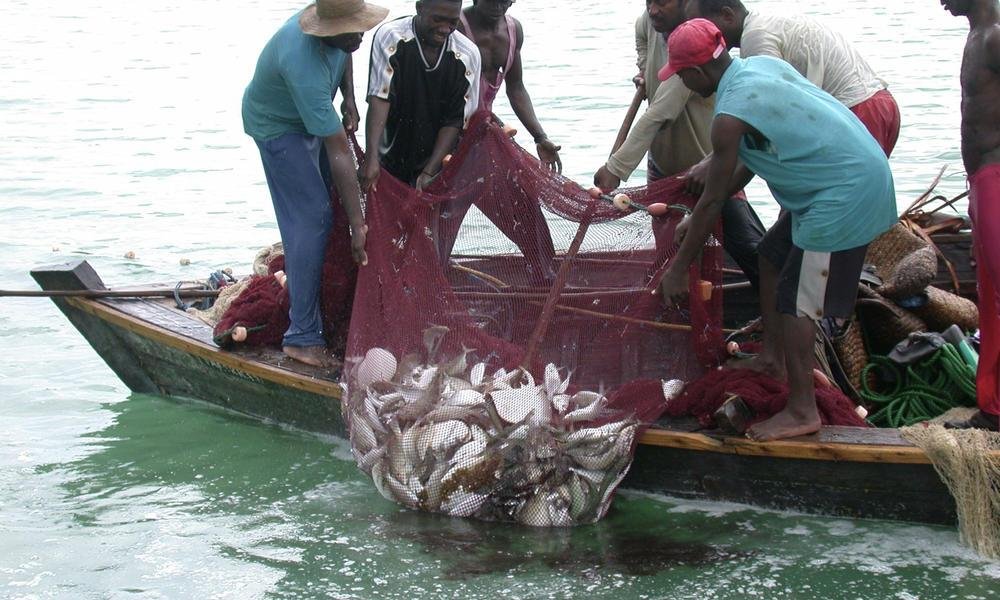
Nigeria plans to strengthen its fight against illegal fishing by joining Blue Justice, a Norwegian-led initiative that uses satellite technology to monitor fishing vessels and combat illegal, unreported and unregulated (IUU) fishing.
The plan was discussed on October 12, 2026, in Abuja during a meeting between Nigeria’s Minister of Marine and Blue Economy, Adegboyega Oyetola, and Norwegian Ambassador Svein Baera.
Satellite Monitoring to Detect Suspicious Activity
Launched in 2019 with support from the United Nations Development Programme (UNDP), Blue Justice provides participating countries with satellite data to track vessels and identify suspicious movements at sea.
Through the Blue Justice Ocean Surveillance programme, Nigerian authorities could access vessel tracking records, including Automatic Identification System (AIS) data. These tools could help investigators detect potential violations and improve maritime inspections.
The initiative also offers historical vessel data covering up to three years, technical assistance and information-sharing mechanisms. More than 40 countries reportedly participate, although Nigeria’s accession date has not yet been confirmed.
Stronger Regional Cooperation
Nigeria is already taking steps to tackle illegal fishing. In August 2026, it joined Liberia in a coordinated maritime patrol under the Fisheries Committee for the West Central Gulf of Guinea. The operation resulted in three vessels being detained by Nigerian authorities over alleged fishing violations.
In June, officials also reviewed a draft national action plan aimed at improving fisheries monitoring, strengthening enforcement and increasing cooperation between government agencies.
At the regional level, Nigeria is supporting the development of a register of authorized fishing vessels to improve permit verification and transparency across member countries.
Protecting Fisheries and Coastal Livelihoods
Nigeria’s potential participation in Blue Justice would complement these measures and strengthen its ability to monitor fishing activities.
The sector is economically important, supporting the livelihoods of approximately 24 million people and contributing up to 5% of the country’s gross domestic product, according to the figures cited in the original report.
Illegal fishing threatens marine resources, government revenue and the income of local fishing communities. Satellite surveillance could therefore help Nigeria improve enforcement and protect its fisheries.