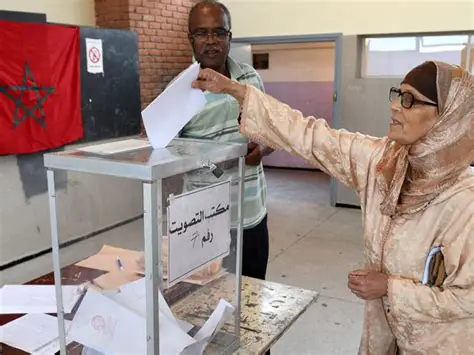
Morocco’s campaign for the September 23 legislative elections officially begins on Thursday. The ruling coalition faces a major test as it seeks to remain in power.
The coalition is led by the National Rally of Independents, or RNI. It is headed by Aziz Akhannouch and faces growing social and political pressure.
Meanwhile, unemployment among young people remains a major concern. Social inequalities are also fueling dissatisfaction across several parts of the country.
Against this backdrop, Moroccan political parties have launched their campaigns. Many candidates are using social media to reach voters and promote their programmes.
Economic and regional inequalities are expected to dominate the campaign. Youth unemployment remains particularly high in several parts of the kingdom.
King Mohammed VI has also criticized what he described as Morocco’s “two-speed” development. This criticism has strengthened debates about economic disparities.
The issue gained renewed attention in late July. Tens of thousands of migrants, mostly Moroccans, moved toward the Spanish enclave of Ceuta.
The episode reflected deeper frustration among parts of Morocco’s younger generation. Similar concerns had already fueled demonstrations organized by the GenZ 212 movement.
The group’s first anniversary will come four days after the election. Its emergence highlights the growing distance between young people and political institutions.
Young voters remain largely absent
Political parties are seeking to capitalize on this dissatisfaction. However, younger voters remain significantly underrepresented among registered voters.
Only about 3% of registered voters are between 18 and 24 years old. Overall, nearly 16 million Moroccans are expected to vote on September 23.
Women account for approximately 46% of registered voters. Their participation could therefore influence the outcome of the election.
Meanwhile, the opposition is also seeking to regain ground. The conservative Islamist Justice and Development Party is campaigning on an anti-corruption platform.
The party is led by former Prime Minister Abdelilah Benkirane. It hopes to recover after its major defeat in the 2021 legislative elections.
Economic and social promises are also multiplying ahead of the vote. However, questions remain about how several proposals would be financed.
Moroccan news outlet Le360 has highlighted particularly ambitious financial promises. It has also pointed to limited details regarding their funding.
Similarly, political scientist Abdellah Tourabi has criticized the nature of the campaign. He described it as lacking genuine competition between political programmes.
In an interview with TelQuel, he compared the campaign to a “contest among local elites.” His assessment reflects broader concerns about political debate.
RNI seeks to defend its record
For the RNI, the election represents an important test. The party won the 2021 election and currently leads the government.
The RNI hopes to retain its position as the country’s leading political force. It also seeks another mandate to head the government.
However, Aziz Akhannouch has stepped down from the party’s leadership. The election will therefore test the party beyond its former leader.
More broadly, voters will assess five years of government under Akhannouch. This evaluation comes as social expectations remain particularly high.
The Authenticity and Modernity Party, known as PAM, is another major RNI rival. The party has several prominent figures within its ranks.
Among them is Fouzi Lekjaa, the minister responsible for the budget. He also heads the Royal Moroccan Football Federation.
His political influence has grown during preparations for the 2030 World Cup. Morocco will jointly host the tournament with Spain and Portugal.
Meanwhile, the Istiqlal Party is also targeting a strong electoral performance. The historic party maintains a significant territorial presence across the country.
It hopes to challenge both the RNI and PAM for political dominance. Their rivalry currently occupies much of Morocco’s electoral landscape.
The king retains major strategic powers
Under Morocco’s political system, the king appoints the head of government. He chooses the leader from the party that wins the legislative elections.
The appointed leader must then form a government for a five-year term. The government exercises significant powers over the country’s administration.
However, the monarch retains control over major strategic orientations. This gives the king a central role in Morocco’s political decision-making.