Morocco is emerging as an important production base for the electric vehicle industry as battery manufacturers expand their presence in the country.
A new partnership between Volkswagen’s battery division PowerCo SE and China’s Gotion High-Tech will add another industrial project to this growing ecosystem.
The two companies plan to establish a joint venture in Kenitra focused on cathode materials for lithium-iron-phosphate batteries, commonly known as LFP batteries. Gotion will own 51% of the venture, while PowerCo will hold the remaining 49%.
LFP technology is widely used in electric vehicles and energy storage. Its lower cost, durability and long operating life have made it increasingly attractive to manufacturers.
A supply chain extending across Europe
The Kenitra facility is part of a broader industrial agreement between Volkswagen and Gotion.
The partners are also planning LFP battery-cell activities in Valencia, Spain, and Surany, Slovakia. The three locations will therefore perform different functions within the same regional supply network.
PowerCo expects to invest about €470 million by 2030 to secure its stakes in the Kenitra and Surany ventures.
For Volkswagen, the objective is to develop a more diversified battery supply network for Europe. The partnership is also intended to reduce supply risks and strengthen the region’s battery manufacturing capacity.
Morocco builds a wider battery ecosystem
The Volkswagen-Gotion project adds to several battery investments already underway in Morocco.
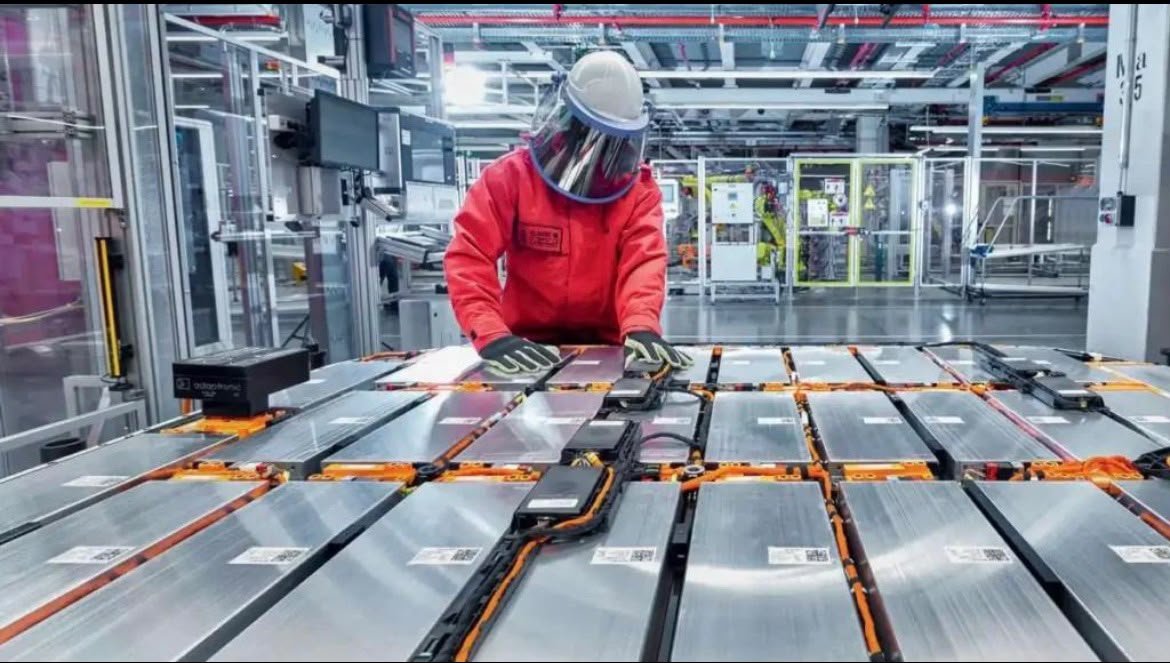
Gotion is developing an integrated LFP battery gigafactory in Kenitra covering cathode materials, electrodes, cells and battery packs.
Meanwhile, BTR New Material Group announced a $308.5 million investment in a cathode-material plant at Tangier Tech. The facility is expected to eventually produce 50,000 tonnes annually.
Hailiang and Shinzoom also announced projects in Tangier Tech involving copper foils and anode materials. Shinzoom later redirected its project to Oman.
At Jorf Lasfar, COBCO opened an industrial facility in June 2025. The company, backed by Morocco’s Al Mada and China’s CNGR, can produce 40,000 tonnes of NMC cathode precursors annually.
The wider complex is also expected to include additional NMC and LFP materials, metal refining and battery recycling.
Morocco is therefore moving beyond vehicle assembly by developing several stages of the battery industry, from raw materials and components to cells, battery packs and recycling.