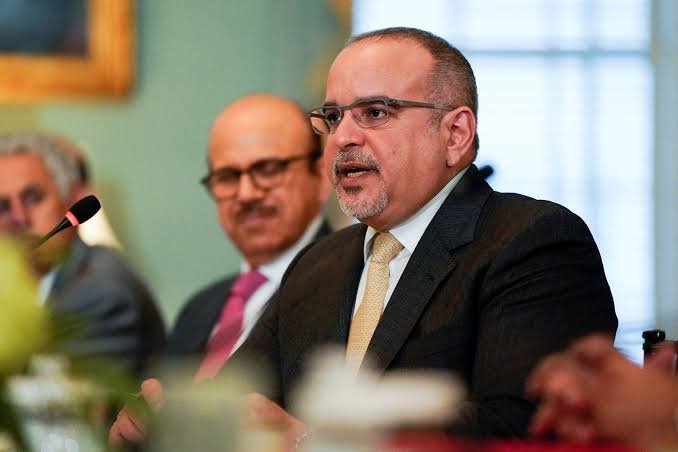
In early November 2026, the institutional landscape of the Kingdom of Bahrain underwent a series of significant adjustments under the impetus of Crown Prince and Prime Minister Salman bin Hamad Al Khalifa. The executive branch launched a reorganization targeting local governance, the management of state land assets, and the training of public service cadres.
The central measure of this political sequence rests on the promulgation of Edict No. 58 of 2026, which redraws the structure of the executive councils of the country’s four governorates.
Politically, this approach is a lever intended to strengthen coordination between the central administration and territorial levels.
The stated objective is to streamline local decision-making and adapt proximity management mechanisms to the current requirements of urban and social development.
However, observers of Bahraini political life regularly emphasize that, in a highly centralized system, the real scope of such restructurings depends largely on the budgetary autonomy and effective prerogatives granted to the governorates vis-à-vis the supervising ministries.
Alongside this territorial reform, the signing of decrees reorganizing the Government Land Investment Committee and appointing a new director at the head of the Public Administration Institute (BIPA) highlights a desire to rationalize the state’s material and human resources.
The overhaul of the land committee responds to major economic issues, with the development of public real estate assets constituting a strategic axis for diversifying non-hydrocarbon revenues.
At the same time, the renewal of the leadership of the Public Administration Institute reflects the importance attached to modernizing managerial skills within the ministries.
The articulation of these three components outlines a comprehensive approach to public governance, in which administrative efficiency is elevated to a political priority.
While supporters of government action see in it proof of dynamism and institutional modernization necessary to support the kingdom’s economic ambitions, other analysts recall that the success of these reforms will be measured by their capacity to concretely improve the quality of services delivered to citizens and to strengthen transparency in the management of public assets.