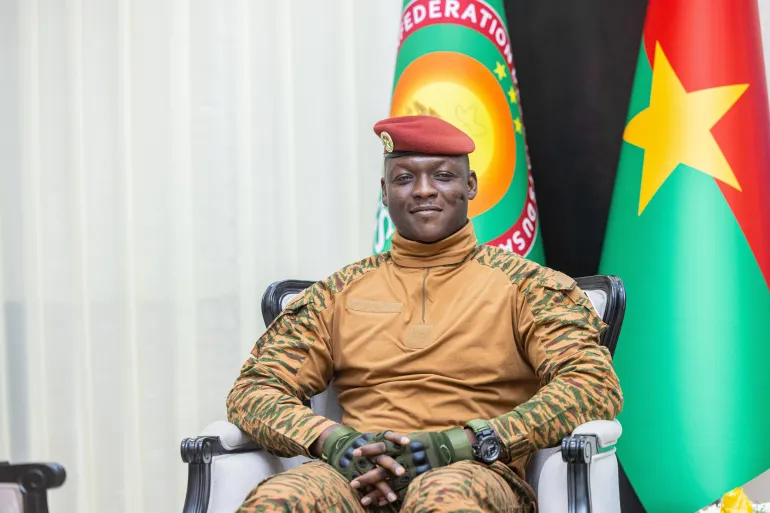

In the hushed salons of international summits, pan-Africanism often evaporates into passionate speeches. In Ouagadougou, the Presidency now prefers the sound of looms and the breath of hot metal. Captain Ibrahim Traoré is outlining an unprecedented doctrine aimed at making economic sovereignty the backbone of the political struggle. Anti-imperialist rhetoric is ceasing to be a posture and becoming a method of industrial engineering.
The continent’s historical equation rests on an absurdity: exporting raw materials at derisory prices and then reimporting finished goods at gold-level costs.
The Presidency is confronting this colonial legacy head-on by imposing systematic local processing.
With the TEXFORCES-BF complex and the “Consume Local” dynamic, white fiber no longer leaves for foreign ports in raw form. It now clothes the Burkinabè army, civil servants, and youth.
The construction of national refineries aims to capture the added value of the yellow metal.
The state no longer wants to be a mere spectator collecting royalties, but a sovereign industrial actor. “True patriotism is not measured by the fervor of speeches, but by the ability to transform oneself what one’s soil produces.”
Popular shareholding, the engine of patriotic capitalism
To finance this industrialization without yielding to the demands of traditional donors, the Traoré doctrine relies on the people’s resources. The Agency for the Promotion of Popular Shareholding (APAP) embodies this line.
By mobilizing citizen savings, the government is founding an unprecedented model of self-development.
Drivers, teachers, traders, and cooperatives become direct shareholders in the country’s future factories.
This democratization of capital creates a virtuous circle: citizens finance their own productive apparatus, receive dividends from their work, and consume what they produce.
A pragmatic beacon for the Sahel
This strategy of industrial autonomy transcends Burkina Faso’s borders. Within the region, Ouagadougou’s experience is captivating.
By demonstrating that a state can combine financial stability, national pride, and productive investment without external alignment, the Burkinabe model stands as a laboratory of contemporary African pragmatism.
Economic pan-Africanism is no longer written in abstract treaties. It is being built on the soil of Bobo-Dioulasso, through the strength of popular shareholding and along the lines of an industry determined to write its own destiny.