
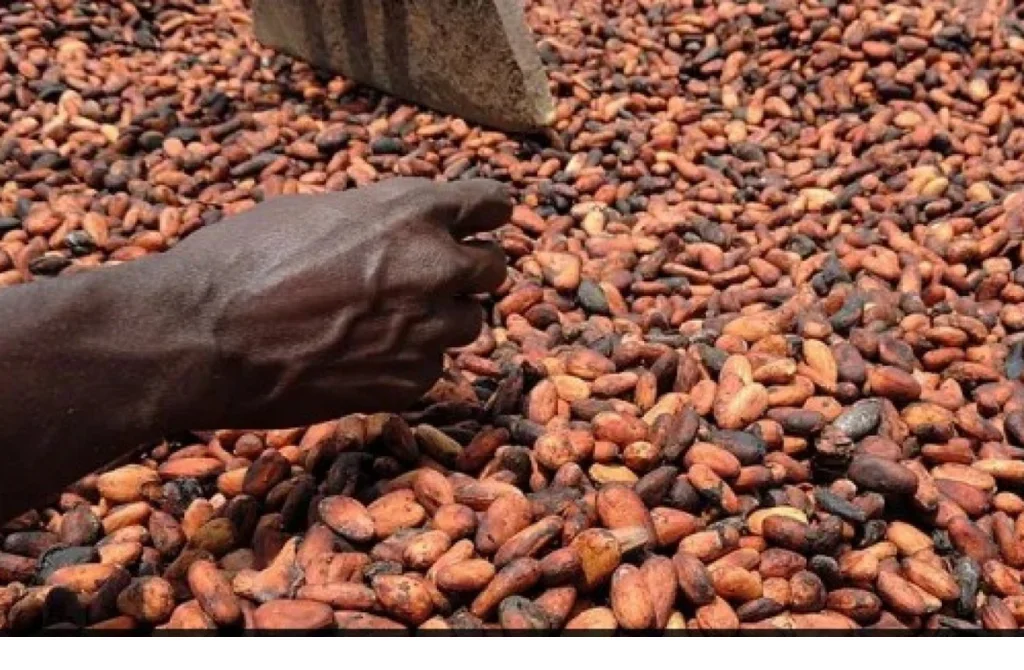
Côte d’Ivoire, the world’s leading cocoa producer, has made its decision: the farm-gate price paid to cocoa farmers for the new main crop season will remain at 1,200 CFA francs per kilogram, exactly the same level set last March for the mid-crop harvest.
However, this decision has fallen short of some farmers’ expectations as the new cocoa season gets underway.
According to the government, the farm-gate price applies exclusively to cocoa beans that have been properly fermented, dried and sorted, in line with the quality standards required by the industry. The announcement comes after several particularly challenging months for the cocoa sector, which remains a key pillar of Côte d’Ivoire’s national economy.
Farmers Express Disappointment
For many cocoa producers, the decision has sparked a sense of disappointment. Following a period marked by volatile market prices and persistent challenges within the sector, some farmers had hoped for a significant increase in their earnings.
Thibaut Yoro, a cocoa producer and agricultural union representative, said farmers had been expecting the price to rise to 1,800 or even 2,000 CFA francs per kilogram. “That was our hope. Unfortunately, the price has remained at 1,200,” he lamented, describing the decision as disappointing.
Mixed Reactions Within the Sector
Nevertheless, other industry representatives have expressed a more measured view. Obed Blonde Doua, Vice-President of the Agricultural Interprofessional Organization (OIA), acknowledged that producers would have welcomed a price closer to 1,500 CFA francs per kilogram, while also taking note of the decision reached by the authorities.
A Delicate Economic Balancing Act
Cocoa remains one of the main drivers of Côte d’Ivoire’s economy, providing livelihoods, directly or indirectly, for millions of people. Consequently, setting the farm-gate price is a delicate task for the government. The authorities must seek to protect farmers’ purchasing power while maintaining the overall stability of a sector already vulnerable to fluctuations in global cocoa prices and months of successive tensions.
Ultimately, by opting for stability rather than a price increase, the Ivorian authorities appear to be taking a cautious approach. While this decision may disappoint part of the farming community, producers may now look to future price reviews in the hope of benefiting from a possible improvement in their earnings.