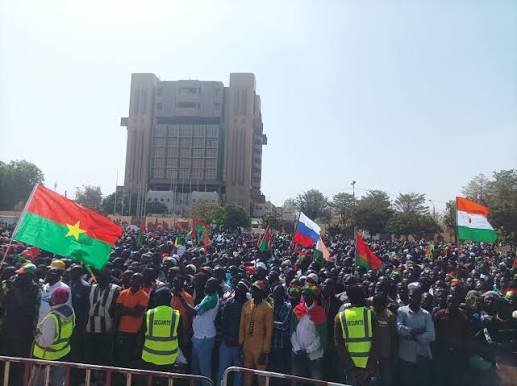
Despite a grinding security crisis and shrinking external financing, Burkina Faso is pressing ahead with major infrastructure projects, framing roads, hospitals and schools as pillars of territorial reconquest and economic sovereignty.
The Burkinabè government has made a deliberate choice: never sacrifice long-term structural investment, even in wartime. Under the Popular Progressive Revolution, infrastructure is being deployed as a tool of both territorial control and economic independence.
The figures back the rhetoric. In 2024, 37 central state contracting authorities awarded 4,492 public contracts worth 615.9 billion CFA francs half of it earmarked for investment, a sharp rise on the previous year.
The push is visible across all 13 regions. The Ministry of Infrastructure and Connectivity hit an 84.60% completion rate on its 2024 performance contracts, helped by new road-works brigades tasked with building quality infrastructure nationwide.
The East region offers a striking example. Under the Emergency Territorial Development and Resilience Project, around 60 billion CFA francs were invested, allowing a large government delegation to inaugurate road, health and education facilities in Fada N’Gourma. The projects state-led with partner support show that reclaiming territory and pursuing development are proceeding in tandem.
Macroeconomic data suggest the strategy is paying off. Growth climbed from 4.8% in 2024 to 5.3% in 2025, driven by security and reconquest operations, a strong agro-pastoral campaign and structural investment, according to the minister delegate for the budget. The rebound is helping restore confidence among regional investors as Burkina Faso charts its own development course.
The pipeline ahead is ambitious. The new Ouagadougou-Donsin airport is expected in 2026 to boost connectivity, while the agro-pastoral and fisheries offensive has mobilized more than 104 billion CFA francs for the 2025–2026 campaign.
Taken together, these investments made amid persistent insecurity and a decline in some external funding underscore Burkina Faso’s determination to stay the course of sovereign development.
By opening up landlocked regions and modernizing roads, health care and education, the state is quietly laying the foundations of a sovereignty that goes beyond slogans and takes concrete shape in the daily lives of its people.