Under Captain Ibrahim Traoré, Burkina Faso has launched a major industrial transformation. The government is putting local production and economic sovereignty at the center of its development strategy.
First, this policy is built around the RELANCE 2026-2030 Plan. It seeks to move away from decades of dependence on external markets.
Instead, the strategy focuses on processing local resources and creating large numbers of jobs. The goal is to build an economy that relies more on domestic production.
Textile industry at the heart of the strategy
On September 9, 2026, the TEXFORCES-BF textile complex was inaugurated in Bobo-Dioulasso. The project reflects the government’s ambition to strengthen local industrial production.
The factory received an investment of 17 billion CFA francs. The project was financed through national savings.
It will transform Burkinabe cotton into finished fabrics and clothing. The plant currently generates 600 direct jobs and 15,000 indirect jobs.
In the long term, TEXFORCES-BF aims to process 50,000 tonnes of cotton each year. It also plans to create 20,000 direct jobs.
Notably, Captain Traoré wore an outfit entirely made by the factory. His choice was presented as a symbol of Burkina Faso’s industrial sovereignty.
Agriculture and food processing
Meanwhile, the government is also expanding industrial activity in the food-processing sector.
The tomato-processing plants in Yako and Bobo-Dioulasso were inaugurated in 2024. They created 100 and 180 direct jobs respectively.
In addition, thousands of indirect jobs have been generated for local farmers. These facilities are helping producers gain access to more structured markets.
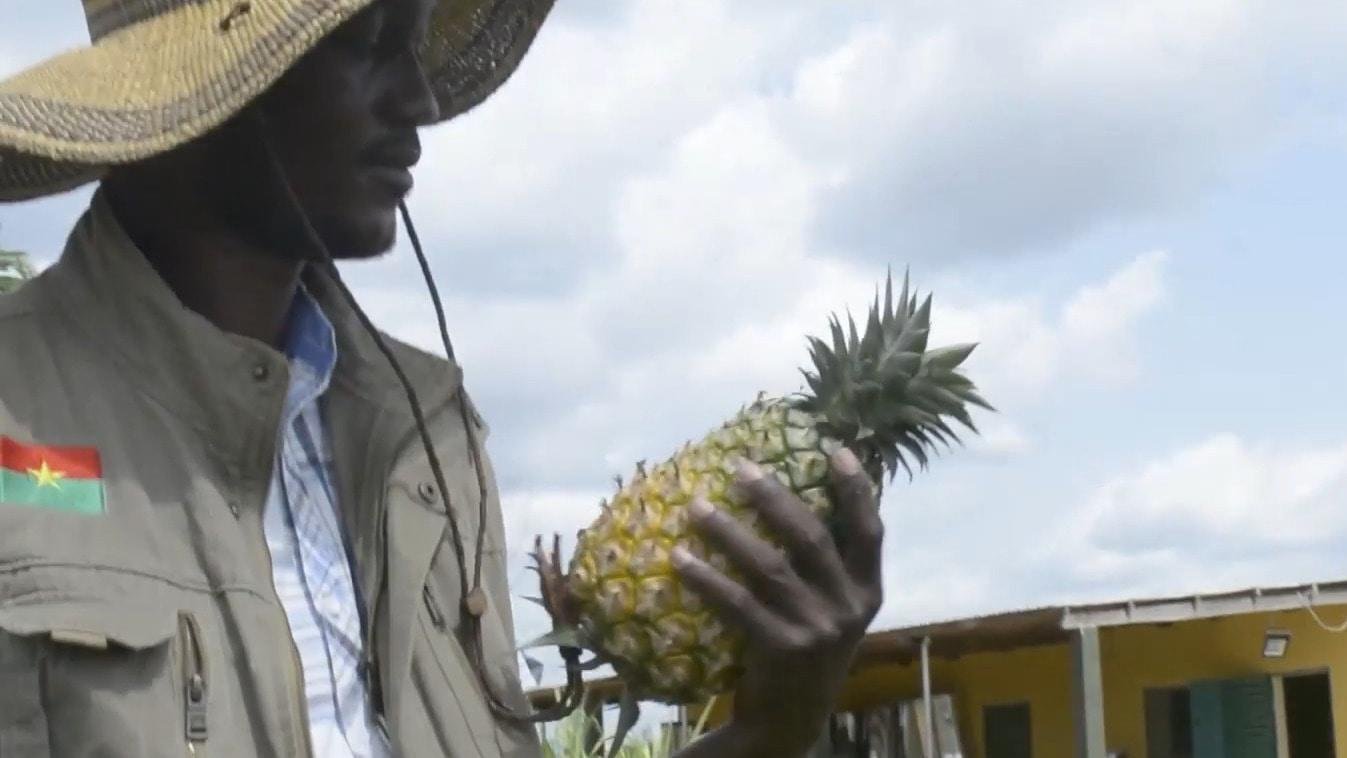
At Péni, the GEBANA Faso complex was inaugurated in June 2026. The facility processes 10,000 tonnes of cashew nuts and 400 tonnes of mangoes each year.
As a result, the project is strengthening agricultural value chains and supporting exports.
Burkina Cajou SA is also contributing to this industrial push. The company invested 9 billion CFA francs and created 1,700 direct and indirect jobs.
Reducing dependence on imports
Furthermore, industrial development is reaching the water sector. The government created Socimah, a state-owned company focused on local production.
The company will manufacture water meters and hydraulic equipment domestically. This could help reduce imports while supporting efforts to expand access to drinking water.
A strategy focused on economic sovereignty
Beyond the factories, the policy is designed to create wider economic benefits for the population.
It aims to provide decent jobs and increase the value of locally produced goods. It also seeks to reduce dependence on imports and strengthen regional economies.
Moreover, the RELANCE Plan has been presented as a “historic declaration of economic sovereignty.” The strategy reflects Traoré’s stated ambition to place national wealth at the service of the Burkinabe people.
Overall, the industrial drive marks a significant shift in Burkina Faso’s economic approach. The government is seeking to transform more of the country’s resources locally before they reach international markets.