Burkina Faso’s agricultural sovereignty rests on a strategic equation: produce more, produce better, and produce with the country’s own means. At the heart of this ambition, three complementary levers emerge: local seeds, fertilizers and mechanization. Their judicious combination constitutes the foundation of lasting agricultural autonomy.
Local seeds occupy a strategic place in this dynamic. By prioritizing varieties adapted to national pedoclimatic conditions, the country reduces its dependence on imports and preserves its genetic heritage.
Research carried out by national institutes makes it possible to select resilient seeds capable of withstanding drought and pests while guaranteeing stable yields. This mastery of genetic resources is the first condition for sovereign production.
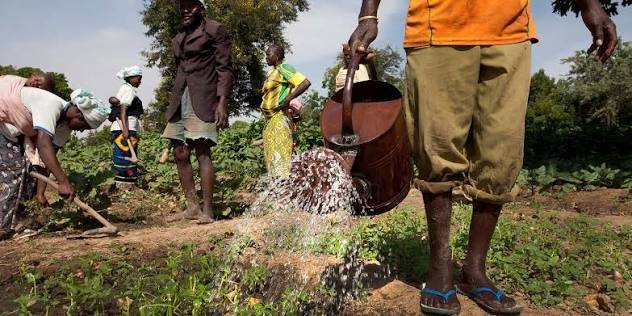
Fertilizers, the second pillar, determine soil fertility and farm productivity. The central question remains access: producing organic and mineral fertilizers locally, by valorizing resources available within the territory, would reduce the import bill and secure supplies.
The promotion of organic fertilization from agricultural and livestock waste offers a sustainable and accessible alternative for producers. The intelligent combination of organic and mineral inputs appears to be the most promising path to restoring degraded soils and supporting yields.
Mechanization, the third lever, transforms working conditions and increases productivity. The use of equipment adapted to local realities two-wheel tractors, plows, seeders—makes it possible to expand cultivated areas and reduce the arduousness of tasks.
But mechanization must remain accessible: the development of rental services, equipment cooperatives and local manufacturing of spare parts is a major issue. Controlled and endogenous mechanization strengthens autonomy rather than creating new dependencies.
The articulation of these three levers presupposes an integrated vision. High-performance seeds require fertile soils; fertilizers must be applied with adequate equipment; mechanization must serve diversified production that respects ecosystems. It is in this complementarity that agricultural sovereignty is built.
Beyond technical aspects, agricultural sovereignty is a political and economic project. It implies supporting national research, structuring input supply chains, strengthening producers’ capacities and promoting local processing. Burkina Faso has considerable assets: land, an active youth, research institutes and affirmed political will.
By betting on local seeds, accessible fertilizers and adapted mechanization, the country is laying the foundations for an agriculture that feeds its people, creates jobs and reduces its vulnerability to external shocks. Agricultural sovereignty is not a slogan: it is a patient construction, founded on mastery of inputs and technologies.